Godspeed Resale Values: What Holds Value
Nothing else of Godspeed is misread as routinely as resale. Because the label produces in small batches and a handful of jackets carry numbered tags, it is easy to imagine that everything appreciates. That reading is not supported by the observed 2026 data. Across a major resale platform’s brand page there were about forty apparel entries, with lowest asks running roughly $75 to $297. Against retail hoodies at $200 to $270 and t-shirts at $128 to $200, the arithmetic allows only one reading: much of the line trades below what it originally cost. Everything below describes observed market behaviour rather than investment advice, and none of it should be treated as a forecast. Prices fall as often as they rise on the secondary market, and a Godspeed piece can lose value within a week of purchase.
How the Secondary Market Actually Works
Godspeed moves product through its own webstore and through a wholesale channel, so stock reaches the public by several routes at once. Observed stockists in 2026 ran to FEATURE, TAKOUT NY, Tops and Bottoms USA, Civilized Nation, Premium Lounge NY, NRML in Ottawa, Farfetch and GOAT. Why does that spread count? Because a piece marked sold out on the brand’s own site may still be sitting elsewhere at full price or discounted. Only when every retail channel is genuinely dry does resale become the cheapest route. Sellers on the secondary market are pricing against that godspeed-hoodie.net shifting backdrop rather than against a fixed retail figure. Most of what looks like random pricing makes sense once you know where a piece sits in that supply picture.
Where the Listings Actually Live
Most of the visible Godspeed resale activity in 2026 sat on three venues, and no two of them behave the same way. One is a large sneaker-and-apparel marketplace, whose brand page carries structured entries, size-by-size asks and a lowest-ask figure per item. A community-driven designer marketplace puts individual sellers on the page, so prices scatter more widely and negotiation is normal. A general auction site carries everything else, including pieces that never reach the other two. None of these venues is a price authority, and the same garment can show three very different numbers on the same day. Treat each listing as one seller’s opinion rather than as a market rate.
- Structured marketplace: consistent data, narrow spreads, fees baked into the ask
- Seller-led marketplace, where prices scatter, offers are welcome and condition varies
- Auction site: asks run widest here, and several never sell
What a Lowest Ask Actually Tells You
What a lowest ask shows is a seller’s hope, not a completed payment. Most bad resale reasoning about Godspeed collapses on that single distinction. In 2026 one varsity jacket carried a $595 ask on an auction site, and $595 there is an ask rather than a retail price or a recorded sale. Nothing stops an unsold ask sitting untouched for months while the true clearing price drifts far below it. Sale history, when a platform makes it available, beats the headline number by a distance. Absent any sale history, treat the real value as sitting below the ask and shape your offer around that.
What the 2026 Numbers Showed
The table below sets observed retail bands against how each category behaved once it reached resale. All of the numbers are 2026 market estimates observed at a single moment, not published price lists and not guarantees. Expect them to have moved already by the time you read this. The pattern is consistent enough to describe: outerwear and scarce graphics hold the firmest, core basics soften the fastest, and accessories sit somewhere in between. A pattern is not a promise about any single item. Two identical hoodies in different sizes routinely clear at different prices, which is a reminder of how thin this market is.
| Product category | 2026 observed retail (USD) | Resale behaviour observed |
|---|---|---|
| Numbered varsity outerwear | No retail captured; pages sold out | Demand firmest here; asks sit well above other categories |
| Hooded fleece | $200-270 | Mixed; common graphics often listed under retail |
| Short-sleeve tees | $128-200 | Weakest; plenty of asks sit in the $75-120 area |
| Sets and sweatsuits | $155-360 | Divides by completeness; incomplete sets discount steeply |
| Premium denim pieces | around $250 | Few listings, and very few comparable sales |
| Headwear | $60-150 | Consistent but low in absolute terms |
| Belts and slides | $250 and $160 | Rarely listed; pricing unreliable |
Pieces That Tend to Hold
A short list of characteristics divides the pieces that keep their number from the ones that do not. The scarcity that counts most is verifiable at garment level, which puts the numbered varsity jackets at the top. The F.T.D and Chrome Seduction varsities were made in stated runs of 200 units, each carrying a numbered authenticity tag. Named collaborations follow the same logic, the collection made with The Lox reaching an audience beyond the label’s usual one. Heavy construction helps too, because wool bodies, vegan-leather sleeves, 3M reflective detailing and dense embroidery are hard to mistake for a generic blank. One stockist’s editorial coverage set out the production philosophy plainly, calling the drops intentionally limited and produced in small batches to preserve the integrity of the design.
- Garment-level scarcity you can actually verify, a numbered run being the clearest case.
- A named collaboration with an audience of its own.
- Construction that costs real money to replicate.
- A colourway that was short even at retail.
Pieces That Tend to Soften
Most of the catalogue lives at the other end of the curve, and that is not a criticism of the product. Godspeed shirts illustrate it best, because they came in the widest colour and graphic assortment. When lowest asks open near $75 against a $128 to $200 retail band, the market is saying supply exceeds demand at retail pricing. Core basics in black and bone soften quickest, since they get restocked and reinterpreted season after season. A seasonal curve governs shorts and nylon pieces, which thin out in autumn and recover in spring. A godspeed hoodie carrying a widely repeated graphic behaves more like a basic than a limited jacket, whatever the original ticket said.
Condition, Tags, and the Numbered Runs
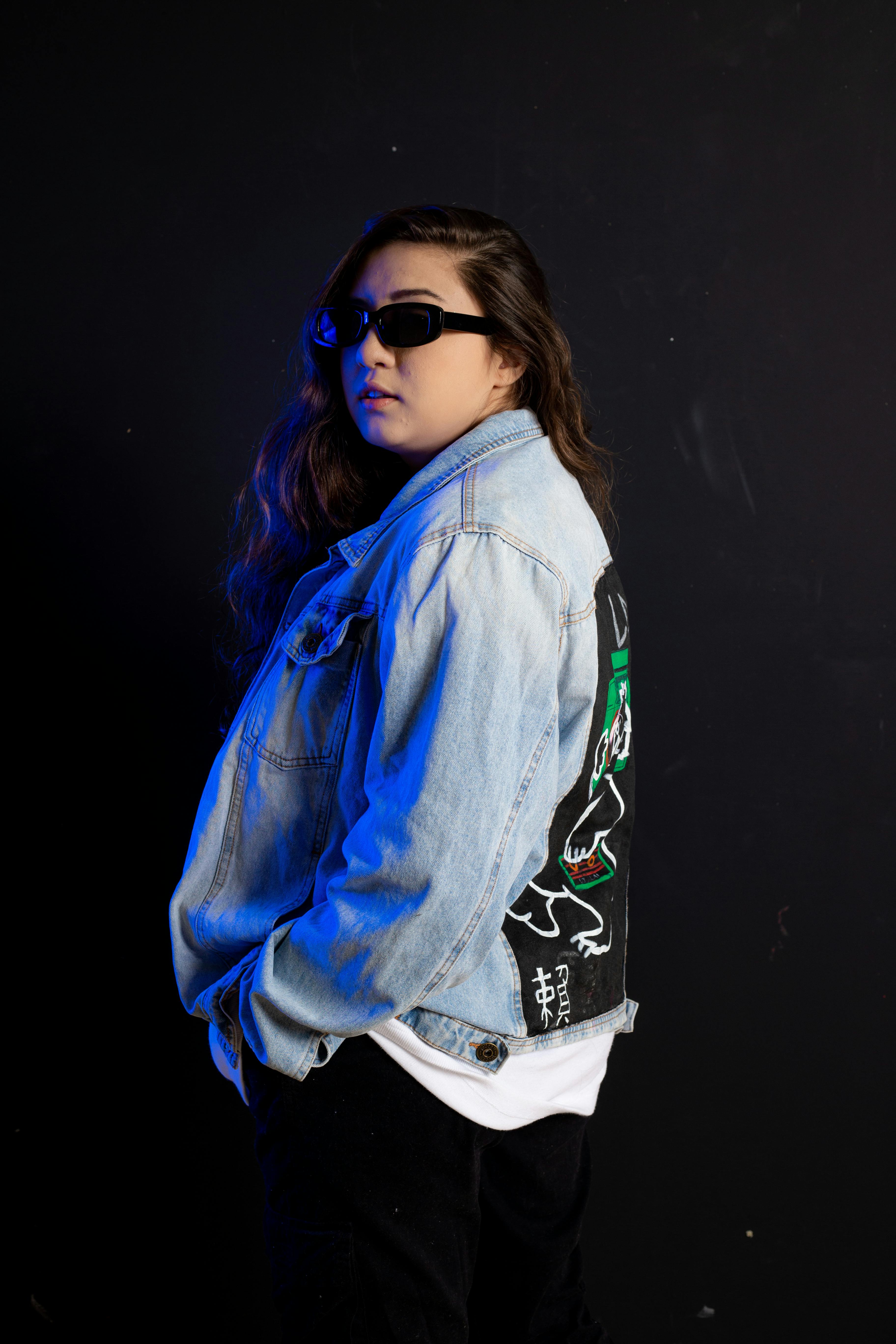
Condition drives more of the final number than buyers tend to expect. The weak point on a printed piece is puff print: heat and pressure flatten or crack it permanently. Grading gets harder with garment washes too, given that a black wash or grey wash finish is supposed to look faded from day one. Ask sellers point blank whether the fading is original to the wash or came out of the laundry, and request close photographs of print edges. On numbered jackets the authenticity tag carries part of the value, and a missing or cut tag lowers what a careful buyer will pay. Packaging matters less than it would with sneakers, yet a complete piece still clears faster than an incomplete one.
Size, Fit and the Discount That Follows
Size curves distort resale prices in ways that catch people out. The house cut is boxy and oversized, so buyers cluster around the middle sizes and leave the extremes behind. The lowest ask on an item is frequently an extra-large or a small, a bargain in appearance only until you put it on. A godspeed hoodie sized two steps off your normal fit is not a saving, it is an unworn garment. Buying to wear? The size discount is genuinely useful, since the cut runs large regardless. For anyone buying to resell, that discount is a warning sign that the size is slow to move.
The Risk, Stated Plainly
Nothing here is guaranteed, and it is worth saying so bluntly. Resale prices on Godspeed can fall, and by 2026 a substantial share of the line was already below its original retail figure. Restocks, wholesale markdowns and a fresh drop in a similar colourway all drag secondary prices down. Small-batch production creates scarcity, but scarcity turns into value only when demand shows up to meet it. This article describes what was observed, not what will happen, and no piece of clothing should be treated as a financial instrument. If a purchase only makes sense because you expect to sell it higher later, that is a reason to reconsider rather than to proceed.
A Level-Headed Way to Buy
The most reliable approach is to buy things you would be content to keep. Set a number you would pay if resale did not exist, and treat any future upside as an accident rather than a plan. Check the retail channels first, because a wholesale partner sitting on old stock at a markdown beats almost every resale ask. Line up at least three listings from different venues before committing to one. Confirm the source is a genuine retailer, not one of the many lookalike storefronts that recycle the brand’s imagery. Let the fleece, the wash and the graphic decide the purchase, and let the market do whatever it is going to do.